Are you wondering what will be covered in your child's Core Enrichment class?
Never fear, we'll explain it here!
Music & Movement: This Core Enrichment class is for our youngest participants. It draws on the pedagogical approaches of Kodaly, Orff, Kindermusik and Suzuki and teaches musical understanding through play, games, singing, and fun!
Ear Training: This Core Enrichment class is the next step up in sophistication from Music & Movement. This class uses Suzuki repertoire to study beginning music theory: scale patterns, pitch, rhythmic dictation, etc.
Dalcroze: This Core Enrichment is the next step up from Ear Training. It teaches concepts of rhythm, structure, and musical expression using movement. It focuses on allowing the student to gain physical awareness and experience of music through training that takes place through all the senses, particularly kinesthetic. Many top-level conservatories require their music majors to study Dalcroze; how fortunate for us that it is part of ISSI's curriculum!

Monday, September 18, 2017

What is a "Core Enrichment" class?
In every student's schedule, there are core classes: classes that correspond to their instrument and their book and piece level. Depending on the level of the student, these classes could include masterclass, technique class, repertoire or performance, and even chamber & orchestra for the older students.
In addition to the core classes, there are also "Core Enrichment" classes. These classes are not instrument-specific, and bring together students of similar ages and levels to work on music in a medium outside of their instrument.
Every student receives one "Core Enrichment" class with their schedule.
(These differ from "Enrichment-only" classes such as Art and Musical Theater, that can be purchased for an additional fee)
Core Enrichment classes can vary from year to year at ISSI; a rotation of offerings keeps things interesting and fresh!
Some Core Enrichment classes that have been offered in the past include:
- American Fiddling
- Celtic Fiddling
- Jazz
- Dalcroze
- Music & Movement
- Ear Training
- Storytelling
Stay tuned to see what will be offered this year!
Friday, July 21, 2017
What do we do with siblings at ISSI?
Siblings not enrolled in ISSI are welcome and encouraged to add enrichment classes for an additional fee. Siblings that are not enrolled in ISSI that attend classes should be quiet and respectful. Parents should take care to supervise siblings and not let them disrupt the classes.
We also offer daycare during ISSI for any siblings or younger students that need care part of the day. You need to add this option in the purchase extras tab during registration. We do have openings in day care and you can add that Monday morning the week of ISSI.
We also offer daycare during ISSI for any siblings or younger students that need care part of the day. You need to add this option in the purchase extras tab during registration. We do have openings in day care and you can add that Monday morning the week of ISSI.
What options do we have for meals during ISSI?
Lunch items can be purchased at the cafeteria of Juan Diego High School.
Families will pay the cafeteria per item daily.
Snacks are also available for purchase at the ISSI scholarship table. Look for our highlighted "item of the day"!
Families will pay the cafeteria per item daily.
Snacks are also available for purchase at the ISSI scholarship table. Look for our highlighted "item of the day"!
Do I need to come with my child to institute?
Children under the age of 12 need to be accompanied by a parent or guardian while at ISSI. It is a large campus and we want to keep all of our students safe. It is also the parent's responsibility for your child's instrument to insure that it is taken care of at all times.
We recommend one adult on campus for each child under 12 years old. Due to the intricate schedules, it is impossible to guarantee that siblings will not have masterclasses scheduled during the same hour.
We recommend one adult on campus for each child under 12 years old. Due to the intricate schedules, it is impossible to guarantee that siblings will not have masterclasses scheduled during the same hour.
Monday, July 17, 2017
Highlight: Saturday's Schedule
We've talked before about what a typical day at ISSI looks like, and we've even highlighted the special schedule on Monday.
Today, we're going to cover the schedule for our Farewell Day, which takes place on Saturday.
Saturday starts out with two hours of classes: the 9 am and 10 am classes are held Saturday because registration and opening ceremonies pushed them out of the way on Monday.
At the conclusion of the 10 am class, families head into the Auditorium for the book 4+ final concert. This is a highlight of the week! Here, students in the upper books perform pieces from their Performance Classes. Each group of students is accompanied by the faculty orchestra on at least one of their pieces. What a great opportunity for the students to perform with orchestra accompaniment!
Especially exciting for 2018: ALL STUDENTS will perform together on the Saturday morning concert. We will play "ISSI Gettin' Down" in commemoration of ISSI's 40th anniversary. It will be a spectacular sight to have every member of ISSI performing together!

When that concert concludes, families have a few minutes to gather together and maybe grab a quick snack in preparation for the final event of ISSI: The Chamber Concerts. (All violin students, as well as book 3+ cellists & violists, need to be prepared to participate in these chamber concerts at 1 pm!)

Because ISSI has so many chamber groups, the chamber concerts are organized into a few different rooms, with recitals happening simultaneously in different locations. Check your child's schedule for the name of their chamber coach, and then head to the room that lists your coach's name. One coach is assigned to each room to organize the recital and help things run smoothly.
These informal chamber concerts are a fun way to conclude an exceptional week of learning and fun. Student chamber groups get to perform for each other (and each others' families) in a small, relaxed environment.
At the conclusion of the Chamber Concerts, ISSI is officially wrapped up until the next summer.
As you leave, be sure to check the lost and found and turn in chamber music at the front desk.
And of course, check your master schedule for next year's dates so you can add them to your family calendar!
Today, we're going to cover the schedule for our Farewell Day, which takes place on Saturday.
Saturday starts out with two hours of classes: the 9 am and 10 am classes are held Saturday because registration and opening ceremonies pushed them out of the way on Monday.
At the conclusion of the 10 am class, families head into the Auditorium for the book 4+ final concert. This is a highlight of the week! Here, students in the upper books perform pieces from their Performance Classes. Each group of students is accompanied by the faculty orchestra on at least one of their pieces. What a great opportunity for the students to perform with orchestra accompaniment!
Especially exciting for 2018: ALL STUDENTS will perform together on the Saturday morning concert. We will play "ISSI Gettin' Down" in commemoration of ISSI's 40th anniversary. It will be a spectacular sight to have every member of ISSI performing together!

When that concert concludes, families have a few minutes to gather together and maybe grab a quick snack in preparation for the final event of ISSI: The Chamber Concerts. (All violin students, as well as book 3+ cellists & violists, need to be prepared to participate in these chamber concerts at 1 pm!)

Because ISSI has so many chamber groups, the chamber concerts are organized into a few different rooms, with recitals happening simultaneously in different locations. Check your child's schedule for the name of their chamber coach, and then head to the room that lists your coach's name. One coach is assigned to each room to organize the recital and help things run smoothly.
These informal chamber concerts are a fun way to conclude an exceptional week of learning and fun. Student chamber groups get to perform for each other (and each others' families) in a small, relaxed environment.
At the conclusion of the Chamber Concerts, ISSI is officially wrapped up until the next summer.
As you leave, be sure to check the lost and found and turn in chamber music at the front desk.
Highlight: Monday Schedule
A typical day at ISSI has 6 hours of classes, a lunch hour, and two recitals (one after lunch and one in the evening).
But the first day of ISSI has its own special schedule, to accommodate registration and opening ceremonies.

If you're attending ISSI for the first time (or if you've ever wondered why Monday feels so different than the other days) here's what you need to know about the first day, Monday:
At 8 am, registration opens for Advanced String Camp students. This includes violins in book 9+, violists in books 5+ and cellists in books 7+. After they pick up their packets that contain their personalized schedules and information materials, they head straight to a 2-hour orchestra rehearsal from 830-1030 am.
Registration for students not in Advanced String Camp opens at 9 am. Once they pick up the packets containing their schedules and information materials, they are invited to participate in a welcoming play-in. Cellists, violists, and violinists all have their own rooms (clearly marked on each students' personalized schedule). These play-ins goes from about 930 am-1030 am and they are a very casual gathering where students join together to play Suzuki repertoire. They get to meet some of the faculty they'll be working with during the week, and they get to warm up by playing review pieces. There is always a lot of energy at the play-ins!

Following the play-ins are the opening ceremonies at 11 am. These ceremonies are an orientation that go over everything you need to know to make your week a success. We hear from the ISSI Director, we meet the entire body of ISSI faculty, and we also hear from the principal of the school where ISSI is held. At the conclusion of the opening ceremonies, we are favored with a performance by the Teacher Workshop orchestra, who has been rehearsing together during the previous week.
Next comes lunch from noon to 1 pm.
After that comes the most important schedule detail of the week: On Monday, and Monday only, your 11 am class happens at 1 pm. This is because the opening ceremonies were happening during that class period on Monday. This is printed on your individual schedule, but it's also helpful to know before hand, because the excitement of that first day can be a little overwhelming!
Classes during the 2 pm, 3pm and 4 pm hours run as regularly schedule.
The day finishes with a concert from the guest artist at 515 pm.

So to recap, here's the breakdown of Monday's specialized schedule:

But the first day of ISSI has its own special schedule, to accommodate registration and opening ceremonies.

At 8 am, registration opens for Advanced String Camp students. This includes violins in book 9+, violists in books 5+ and cellists in books 7+. After they pick up their packets that contain their personalized schedules and information materials, they head straight to a 2-hour orchestra rehearsal from 830-1030 am.
Registration for students not in Advanced String Camp opens at 9 am. Once they pick up the packets containing their schedules and information materials, they are invited to participate in a welcoming play-in. Cellists, violists, and violinists all have their own rooms (clearly marked on each students' personalized schedule). These play-ins goes from about 930 am-1030 am and they are a very casual gathering where students join together to play Suzuki repertoire. They get to meet some of the faculty they'll be working with during the week, and they get to warm up by playing review pieces. There is always a lot of energy at the play-ins!

Next comes lunch from noon to 1 pm.
After that comes the most important schedule detail of the week: On Monday, and Monday only, your 11 am class happens at 1 pm. This is because the opening ceremonies were happening during that class period on Monday. This is printed on your individual schedule, but it's also helpful to know before hand, because the excitement of that first day can be a little overwhelming!
Classes during the 2 pm, 3pm and 4 pm hours run as regularly schedule.
The day finishes with a concert from the guest artist at 515 pm.

So to recap, here's the breakdown of Monday's specialized schedule:
- 8 am: Advanced String Camp Registration
- 830-1030 am: Advanced String Camp Orchestra rehearsal
- 830 am: Registration opens for everyone else
- 9-10 am: Welcome Play-ins
- 1030 am: Opening Ceremonies in the Auditorium
- 12noon: Lunch
- 1 pm: Attend your 11 am class!
- 2 pm: Class
- 3 pm: Class
- 4 pm: Class
- 515 pm: Guest Artist concert
- 615 pm: head home for dinner and a good night's rest

Sunday, February 28, 2016
Highlight: Lunch Time!
One of the best times of the day comes at noon, when classes break for the lunch hour and the lunch time concerts.
It's nice to sit with friends, enjoy a delicious lunch (whether you pack in your own lunch, buy individual items from the school cafeteria, or run to one of the nearby restaurants for take-out), and talk about the great things you've been learning that day.

If the weather's nice, students can even head outside to play on the lawn and get some fresh air. Getting those wiggles out in the middle of the day is always a good idea!
This is also a great time to visit the vendors' tables, where you can purchase anything from fine instruments to books to stuffed animals to treats and hair bows!
After enjoying your lunch and having a little down time, you want to be sure to head in to the auditorium to enjoy the lunch time concert, which always starts at 1 pm.
Every day has a different offering: sometimes the performers are our guest artists (such as the Fry Street Quartet or cellist Dane Johansen), sometimes they are student ensembles who are participating in the Fry Street Days chamber program, and sometimes the performers are actually students from ISSI, who audition for this particular performance opportunity via video submission. (More information here).
Hearing professionals and peers present polished performances in the middle of the day is a great way to find inspiration!
Monday, February 22, 2016
Highlight: Chamber Music
Without a doubt, a class that students always love is chamber music!
A chamber group is a small ensemble of musicians who each play their own part. A smaller group than an orchestra, and with less people on each part, chamber music gives students all the fun of playing together, but with the added responsibility of being a leader on their own part within the group. Chamber groups, which can be comprised of any number of combinations of instruments, rehearse daily with a chamber coach, and perform at the end of the week without any help from the coach. No conductor means students really take ownership of their note-reading, rhythm, and ensemble! (Enjoy this performance of a cello chamber group from 2015):
Chamber music is part of a daily schedule for violin students in late book 4 and above, and viola and cello students in books 3 and above. Students receive their music in the mail a few weeks before Institute starts, and should come with their part solidly prepared, so they can truly contribute to the group.
ISSI is truly fortunate to have an incredible partnership with the Fry Street Quartet (FSQ), quartet in residence at Utah State University. The FSQ made their debut at Carnegie Hall, has been involved in numerous projects and performances throughout the country, and has been hailed as a "triumph of ensemble playing" by the New York Times. This incredibly talented, dynamic group works with advanced string quartets in The Fry Street Days chamber program at ISSI; an intensive chamber music experience. (For more information on Fry Street Days, visit this link here.)
It is always fun to see the friendships develop between members in chamber groups. I know many friendships that started this way (as chamber groups at ISSI), and are going strong 25 years later!
Do any of you ISSI alumni have fond memories of, or keep in touch with, members in your string quartets? Tell us about it in the comments!
A chamber group is a small ensemble of musicians who each play their own part. A smaller group than an orchestra, and with less people on each part, chamber music gives students all the fun of playing together, but with the added responsibility of being a leader on their own part within the group. Chamber groups, which can be comprised of any number of combinations of instruments, rehearse daily with a chamber coach, and perform at the end of the week without any help from the coach. No conductor means students really take ownership of their note-reading, rhythm, and ensemble! (Enjoy this performance of a cello chamber group from 2015):
Chamber music is part of a daily schedule for violin students in late book 4 and above, and viola and cello students in books 3 and above. Students receive their music in the mail a few weeks before Institute starts, and should come with their part solidly prepared, so they can truly contribute to the group.
It is always fun to see the friendships develop between members in chamber groups. I know many friendships that started this way (as chamber groups at ISSI), and are going strong 25 years later!
Do any of you ISSI alumni have fond memories of, or keep in touch with, members in your string quartets? Tell us about it in the comments!
Monday, February 15, 2016
Highlight: Orchestra
Another class that is always a hit with students is orchestra.
In fact, you might say it makes them all very Happy...
Orchestra class is a large group of mixed instruments who meets together to work on note-reading and prepare a piece or two for a final concert on the last day of class.
ISSI has orchestra classes available for students as young as 8 years old, and in books 2 and above.
Highlights of this class include getting to know students who play other instruments, learning note-reading, getting experience playing in an ensemble, and learning how to receive direction from a conductor. Some conductors even let their students conduct and compose music!
One of ISSI's favorite conductors is Leo Kitajima (aka "Mr K"), who often writes music the week of institute that exactly fits the level of the students in each of his groups. Last year during one of his class's sessions, he asked for a few volunteers to improvise a few measures of music. He recorded the individual students as they played for their class, and then took those little nuggets of music to create an entire piece for them to perform at the end of the week! What a magic moment for those students to perform something they had helped create!
Older students in the Advanced String Camp get the opportunity to work with the Fry Street Quartet for one hour of orchestra each day. In this class, the Fry Street doesn't conduct: rather, they sit in the principal seats and lead the group as if it were just a giant chamber group.

Another favorite conductor at ISSI is Connie Hadlock who dons a curly wig, thick black glasses, and fake teeth. She speaks in a German accent and pulls in the funniest props and games (such as an Indian headdress and a Statue of Liberty costume) for the children to play with! There is never a dull moment in her class; everyone should stop in and see how much fun she has with the students!
Whichever conductor a student gets the opportunity to work with, they will come away from their orchestra experience better note-readers, more sensitive ensemble players, and musicians with a better understanding of how their individual talent can contribute to a beautiful musical whole.
In fact, you might say it makes them all very Happy...
Michael McLean groovin' with the students in one of his orchestra classes
Orchestra class is a large group of mixed instruments who meets together to work on note-reading and prepare a piece or two for a final concert on the last day of class.
ISSI has orchestra classes available for students as young as 8 years old, and in books 2 and above.
Highlights of this class include getting to know students who play other instruments, learning note-reading, getting experience playing in an ensemble, and learning how to receive direction from a conductor. Some conductors even let their students conduct and compose music!
Denise Willey works with one of our younger orchestras is 2011
One of ISSI's favorite conductors is Leo Kitajima (aka "Mr K"), who often writes music the week of institute that exactly fits the level of the students in each of his groups. Last year during one of his class's sessions, he asked for a few volunteers to improvise a few measures of music. He recorded the individual students as they played for their class, and then took those little nuggets of music to create an entire piece for them to perform at the end of the week! What a magic moment for those students to perform something they had helped create!

Above: Gabe Bolkosky lets a student try conducting the orchestra
Another favorite conductor at ISSI is Connie Hadlock who dons a curly wig, thick black glasses, and fake teeth. She speaks in a German accent and pulls in the funniest props and games (such as an Indian headdress and a Statue of Liberty costume) for the children to play with! There is never a dull moment in her class; everyone should stop in and see how much fun she has with the students!
Whichever conductor a student gets the opportunity to work with, they will come away from their orchestra experience better note-readers, more sensitive ensemble players, and musicians with a better understanding of how their individual talent can contribute to a beautiful musical whole.
Monday, February 8, 2016
Highlight: Master Class
One of the most valuable classes in a student's day at Institute is Master Class.
In this class, a group of between 3-4 students meets with a master teacher each day. Each student is given a short, individual lesson every day and receives a small, concentrated assignment to practice before returning to the master class the next day. It's best to consult with your home teacher, prior to institute, to make sure you bring a polished piece to play for your masterclass at ISSI.
Working one-on-one with a teacher every day yields the opportunity to really delve into some details, and make tremendous, specific progress. Students also learn so much by observing the mini-lessons of their peers.
In a master class with Helen Higa in 2015, she delved into the concept of space. As Lao Tsu asked, why do we build buildings? To use the space inside. As Mozart put it, the music happens in the space between notes. As one mother learned in this class last summer, a child's growth happens when a parent steps back to give the child space to discover on their own.
From a master class with Elizabeth Means in 2015, students learned the importance of telling a story through their music; getting past the technique and the correctness of it all, to expressing feelings and ideas that were in their hearts. She had one student draw a story in pictures that represented the piece she was working on. The best part: to represent a part in the piece that sounded angry, the student drew a picture of what her dad looked like when he was upset his children weren't going to bed!
Master class is magical because the students get both individual and group instruction, and are able to connect one-on-one with master teachers. It is one of the highlights of the day!
Have you had any meaningful or memorable master class moments? Share them with us in the comments!
Monday, February 1, 2016
Highlight: Performance Class
With so many classes offered each day, there is never a dull moment at ISSI!
Let's take a moment to highlight one of those wonderful classes: Performance Class.
In this class, students work together to polish a few pieces (typically two) in preparation for a concert at the end of the week. Teachers use all kinds of fun games and ideas as they teach a high standard of technique and musicality through games and fun.
In this cello performance class in 2014, Elizabeth Means had the students sit in a circle facing outwards, so they couldn't easily see each other. This required them to listen more carefully to each other in order to stay together.
Stay tuned for future posts that will highlight other fun parts of a day at institute!
Want to know more about a typical day at ISSI? Read this post here.
Let's take a moment to highlight one of those wonderful classes: Performance Class.
In this class, students work together to polish a few pieces (typically two) in preparation for a concert at the end of the week. Teachers use all kinds of fun games and ideas as they teach a high standard of technique and musicality through games and fun.
In this cello performance class in 2014, Elizabeth Means had the students sit in a circle facing outwards, so they couldn't easily see each other. This required them to listen more carefully to each other in order to stay together.
What are some of your favorite performance class moments? Leave a comment and share with us!
Want to know more about a typical day at ISSI? Read this post here.
Saturday, October 4, 2014
ISSI: A Day in the Life
All year long you hear the buzz about Institute. Teachers, friends, fellow students talk about it and remember the fun times they had.
But for the family new to the Institute experience, it can be a bit overwhelming! We get so many questions about what a day at Institute is like, that we thought we'd share one with you here.
Institute runs for an entire week, Monday-Saturday. Monday has a slightly different schedule, to allow for registration and orientation, and Saturday's schedule is slightly different because of final concerts. We can look at those special days at another time, but for today, I thought it would be nice to give you a glimpse of what a usual day was like for myself and my child at ISSI.
Please keep in mind that the following is a SAMPLE SCHEDULE and is not a guarantee that your child's schedule will be exactly the same.
830 am Arrive at Juan Diego high school
We like to get there early to make sure we find a good parking spot, and so that we don't feel hurried or rushed to get to class. Starting the day off with a relaxed pace goes a long way in making sure your child enjoys the rest of their day!
9 am Repertoire Class
During this class, my child works in a large group of students to prepare a piece or two for a performance at the final concert on Saturday. The teacher may go over other principles of string-playing through the week, but the main focus of this class is to prepare for that final performance. I love seeing the growth during the week, as well as the polish that comes from really digging into the details of a piece. And nothing beats the sound of a group of students playing a polished performance together; it is so exciting!
 10 am Technique class
In this class, my child works in a large group of students who all play the same instrument and are at the same level. The teacher guides the class in studying and growing different techniques needed to play their instrument well. These classes can be quite a lot of fun, as many teachers bring games and different approaches to technique.
11 am Orchestra
Depending on what level your student is registered for, they may be placed in an orchestra class. This class is fun because it combines different instruments together (violin, viola, cello, bass) and focuses on note-reading. Students do not receive music ahead-of time, so it is a true sight-reading experience! ISSI has some incredible orchestra conductors, and orchestra is often students' favorite class. Students give a performance of their work at the final class of the week.
12 pm Lunch
This is one of our favorite times of the day! We get to connect with our friends and family, and see how their day is going. We get to talk about all the things they've learned and how things are going.
You can pack your own lunch, buy individual items from the school cafeteria, or buy lunch at one of the many different restaurants close to campus. We like to eat out at least once during the week, just because it's a fun way to make the week feel special.
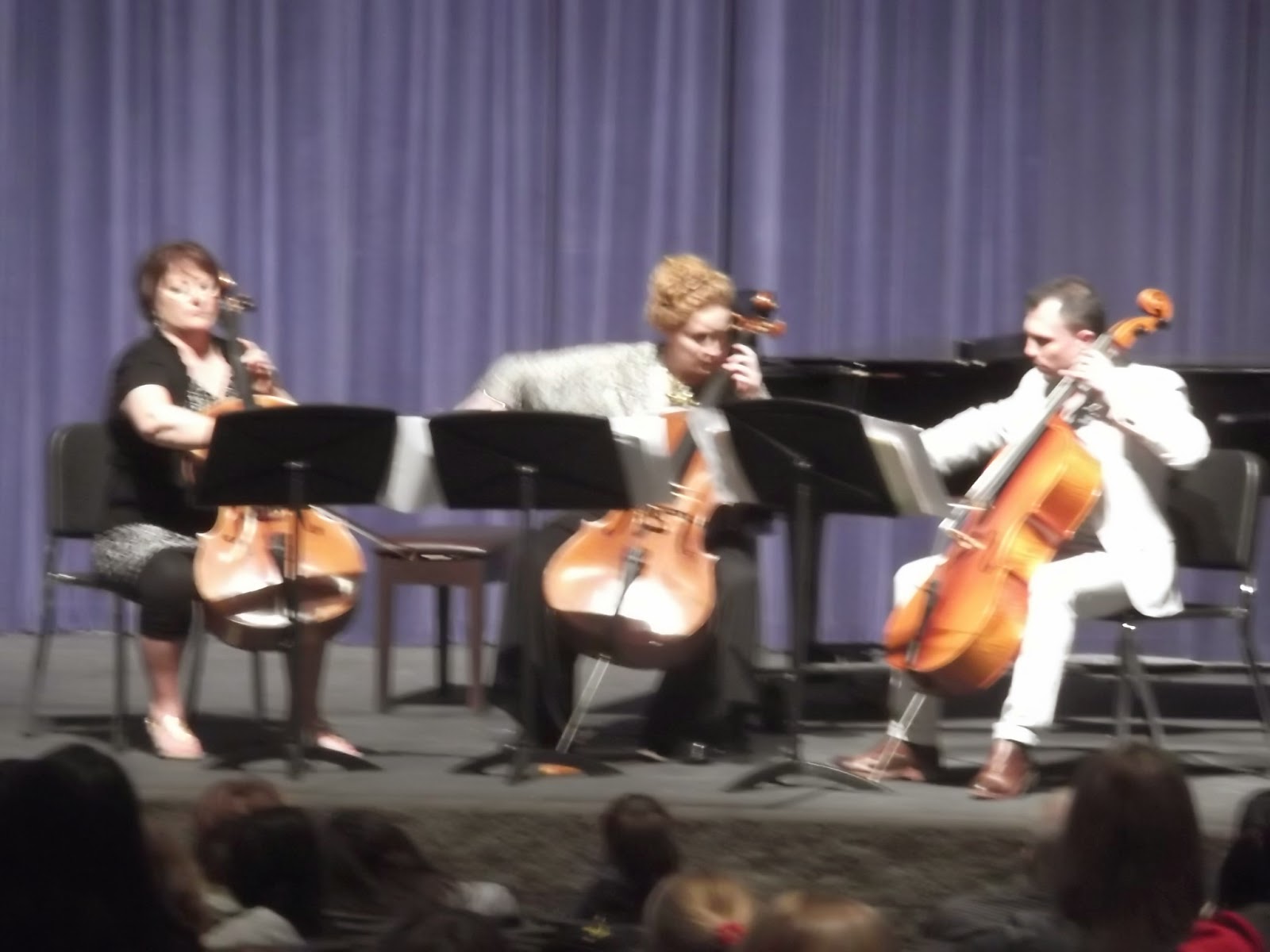 1 pm Lunch time concert
Every day (except for Monday and Saturday....remember those days have special schedules) there is a lunch time concert. And every one is always a treat! These concerts feature ISSI students as soloists, or in chamber groups. And sometimes the concerts even feature our own faculty. Whatever is on the program, you will be inspired! You do not want to miss these.
2 pm Enrichment Class
ISSI offers some extra classes, which you can sign up for if you like. If you don't sign up for an enrichment class, you'd just have a free hour during that time. There have been classes such as art, story-telling, Zumba for kids, juggling, Kodaly, fiddling, etc. You'll want to check this year's registration flyer to see what will be offered. These non-music classes can sometimes be the pick-me-up you need during a day full of concentrated music instruction!
3 pm Chamber
When I attended ISSI as a young student, this was always my favorite class! Chamber groups are small groups of students playing together; usually comprised of 3-4 students. Each student receives their music a few weeks before ISSI, and is expected to come with their music already learned and prepared (not memorized). In this class, one teacher (a chamber coach) works with the group to help them polish their piece, which they play at a final concert on Saturday afternoon. This performance is without a teacher leading them, so the students really grow in taking responsibility and ownership of the music they are creating.
4 pm Master Class
 This class is comprised of a small group of 3 to 4 students, each playing the same instrument. Every day in this class, each student gets a mini-lesson from the instructor, while the other students watch. So much learning can take place when a child observes the learning of their peers! It is also a special treat for students to get one-on-one time with their master teacher every single day. I love the way the teacher can zero in on one or two particular concepts, and nurture the growth of those throughout the week.
515 pm Concert
Most days, there is a concert after classes end. These are always such a treat, and a great way to unwind and relax from a long day of working. In the past, these concerts have highlighted the week's Guest Artist, the fiddling classes, the Advanced Camp Students (ISSI students in the upper Suzuki books and beyond), etc. You'll want to check the ISSI schedule you receive in your registration materials at the beginning of the week so you know what is happening each night.
Well, there you have it: A day in the life of ISSI!
We can't wait for you to join us in 2015

But for the family new to the Institute experience, it can be a bit overwhelming! We get so many questions about what a day at Institute is like, that we thought we'd share one with you here.
Institute runs for an entire week, Monday-Saturday. Monday has a slightly different schedule, to allow for registration and orientation, and Saturday's schedule is slightly different because of final concerts. We can look at those special days at another time, but for today, I thought it would be nice to give you a glimpse of what a usual day was like for myself and my child at ISSI.
Please keep in mind that the following is a SAMPLE SCHEDULE and is not a guarantee that your child's schedule will be exactly the same.
830 am Arrive at Juan Diego high school
We like to get there early to make sure we find a good parking spot, and so that we don't feel hurried or rushed to get to class. Starting the day off with a relaxed pace goes a long way in making sure your child enjoys the rest of their day!
9 am Repertoire Class
During this class, my child works in a large group of students to prepare a piece or two for a performance at the final concert on Saturday. The teacher may go over other principles of string-playing through the week, but the main focus of this class is to prepare for that final performance. I love seeing the growth during the week, as well as the polish that comes from really digging into the details of a piece. And nothing beats the sound of a group of students playing a polished performance together; it is so exciting!
10 am Technique classIn this class, my child works in a large group of students who all play the same instrument and are at the same level. The teacher guides the class in studying and growing different techniques needed to play their instrument well. These classes can be quite a lot of fun, as many teachers bring games and different approaches to technique.
11 am Orchestra
Depending on what level your student is registered for, they may be placed in an orchestra class. This class is fun because it combines different instruments together (violin, viola, cello, bass) and focuses on note-reading. Students do not receive music ahead-of time, so it is a true sight-reading experience! ISSI has some incredible orchestra conductors, and orchestra is often students' favorite class. Students give a performance of their work at the final class of the week.
12 pm Lunch
This is one of our favorite times of the day! We get to connect with our friends and family, and see how their day is going. We get to talk about all the things they've learned and how things are going.
You can pack your own lunch, buy individual items from the school cafeteria, or buy lunch at one of the many different restaurants close to campus. We like to eat out at least once during the week, just because it's a fun way to make the week feel special.
1 pm Lunch time concertEvery day (except for Monday and Saturday....remember those days have special schedules) there is a lunch time concert. And every one is always a treat! These concerts feature ISSI students as soloists, or in chamber groups. And sometimes the concerts even feature our own faculty. Whatever is on the program, you will be inspired! You do not want to miss these.
2 pm Enrichment Class
ISSI offers some extra classes, which you can sign up for if you like. If you don't sign up for an enrichment class, you'd just have a free hour during that time. There have been classes such as art, story-telling, Zumba for kids, juggling, Kodaly, fiddling, etc. You'll want to check this year's registration flyer to see what will be offered. These non-music classes can sometimes be the pick-me-up you need during a day full of concentrated music instruction!
3 pm Chamber
When I attended ISSI as a young student, this was always my favorite class! Chamber groups are small groups of students playing together; usually comprised of 3-4 students. Each student receives their music a few weeks before ISSI, and is expected to come with their music already learned and prepared (not memorized). In this class, one teacher (a chamber coach) works with the group to help them polish their piece, which they play at a final concert on Saturday afternoon. This performance is without a teacher leading them, so the students really grow in taking responsibility and ownership of the music they are creating.
4 pm Master Class
515 pm Concert
Most days, there is a concert after classes end. These are always such a treat, and a great way to unwind and relax from a long day of working. In the past, these concerts have highlighted the week's Guest Artist, the fiddling classes, the Advanced Camp Students (ISSI students in the upper Suzuki books and beyond), etc. You'll want to check the ISSI schedule you receive in your registration materials at the beginning of the week so you know what is happening each night.
Well, there you have it: A day in the life of ISSI!
We can't wait for you to join us in 2015
Monday, September 1, 2014
Staying Inspired
ISSI wrapped up just a short two and a half months ago, but it does seem like it's been forever sometimes! Here are some tips to keep that motivation going:

- Write down some of the important points you learned while at ISSI and keep them with your child's practice materials or on the wall in your practice area.
- Post pictures of ISSI in your practice room or in your case
- Wear your ISSI t-shirt often
- Stay connected with your friends from ISSI via email and social media
- Check out ISSI's Facebook page; there are always tips, photos, etc being posted
- Start planning and saving now for ISSI next year (June 15-20, 2015). Talk with your child often about it to get them excited.
- Talk with your teacher and other students in your studio about next year's ISSI; see who is planning to come, and invite friends to come with you (especially those who may not have participated this year)
We look forward to seeing you in 2015!
Friday, June 13, 2014
Institute has started...what do I need to bring?
With classes going from 9 am till 5 pm, and concerts and events after that, Institute brings with it some very long days!
Arriving prepared with the essentials (and with a few little extras!) can make all the difference in keeping your energy and enthusiasm up during the week.
Here's what we recommend:
Essentials
Extras
Arriving prepared with the essentials (and with a few little extras!) can make all the difference in keeping your energy and enthusiasm up during the week.
Here's what we recommend:
Essentials
- instrument and bow in a case labeled clearly with your name and phone number
- music stand
- rosin
- for cellos: small chair (if needed) and endpin strap
- notebook and pen (to record all the great things you learn this week!)
- Lunch (whether you pack your lunch, plan to purchase individual items from the school cafeteria, or plan to eat out at a nearby restaurant, know what your noon time plans are!)
- schedule (which you'll pick up at registration)
- name badge (which you'll pick up at registration)
Extras
- water bottle
- light sweater (rooms can get cold)
- $1 bills to buy treats at the scholarship table
- a snack or two to get you through that mid-day slump
- coloring books, magnet doodle boards, etc for children who have breaks
- camera (to record all the fun you have this week!)
What about you? What things will you be bringing with you to ISSI this year?
Wednesday, April 30, 2014
These Are a Few of My Favorite Things...
ISSI 2014 is just around the corner!
We've taken an informal poll to find out what people love most about ISSI. Here are some of the results:
So, what is it you can't wait for at ISSI? Leave your answer in the comments section!
We've taken an informal poll to find out what people love most about ISSI. Here are some of the results:
- The Cello Concert
- Incredible faculty
- the energy of the week
- meeting (and learning from) other parents
- reuniting with friends from all over
- fresh perspectives and ideas
So, what is it you can't wait for at ISSI? Leave your answer in the comments section!
Saturday, March 1, 2014
ISSI 2014
Dear Friends
Registrations are coming in, music is being learned, excitement is in the air about ISSI 2014!
We are looking forward to welcoming old friends and making new ones; to learning new music and polishing familiar tunes; to fiddling, Zumba, the Fry Street, story telling, and lunch time concerts.
It promises to be one of our best summers yet!
Visit our website to register.
Friday, August 2, 2013
Highlights from ISSI 2013
What a phenomenal Institute we had this year! We were surrounded for a week by incredible teaching, dedicated families, and lots of fun! Here are a few highlights
Susan Reid's Story Telling class

Anne Montzka-Smelser helping a student find the perfect bow hold

Fun at the Cello Concert on Friday

Enjoying Pace Popsicles sold by the scholarship table

Cousins!

A performance of the Opera, "Caps for Sale" by Susan Reid's Story telling class

David Evenchick works with Twinkler cello students

Monday, July 1, 2013
ISSI 35th Anniversary
This year's ISSI was a rousing success!
We'll be posting reports, pictures, and videos during the next few weeks to recap this amazing experience.
The highlight of many participants was the performance of "ISSI Gettin' Down", a piece written especially for the 35th Anniversary of our Institute by Michael McLean.
Special thanks to the students, teachers, parents, faculty and staff who made this all come together.
It was one moving, memorable performance!
Wednesday, May 1, 2013
48 days away...and counting!
We are only 48 days away from Institute! 48 days away from recitals, classes, chamber music, twinkles, teachers, inspiration, t-shirts, memories, and fun!
In your preparation for Institute this year, here are some things you might want to keep in mind.
(This article was originally published here, on the website of the Suzuki Association of the Americas).
Lead with a Smile! Making the Most of a Suzuki Institute by Joanne Bath,Pamela Bath Kelly Photo by South Carolina Suzuki Institute With the proper attitude and preparation, an institute can be a powerful investment in your child’s musical process, and can be a pivotal point in your family’s musical year. Just as important as your musical preparation is your approach to the new situations you will experience. Be open to meeting new people and new ideas, and remember that your child is looking at you and your responses. Lead with a smile. Here are a few other suggestions for getting the most from your family’s institute experience. Have an open mind. This can be the key to an enlightening and exciting institute. Be ready to try new ways of doing things; be willing and eager to experiment with new ideas; be flexible! Not only will your institute teachers appreciate these qualities in you and your child, but your home teacher will appreciate learning from things you have learned at the institute. Suzuki teachers love to share with each other because we realize that everyone has something special to offer. You can function as a receiver and a giver between your home teacher and your institute teachers.
Find your balance. Wonderful activities are scheduled every hour of the day. In order for you to stay fresh for your schedule and to pace yourself and your child through the week, find a regular “down” time, and don’t feel guilty!
Arrive at each class early. Quietly open your case and get your instrument ready to be tuned.
Use your tape recorder. You will be glad to be able to re-play lessons and classes when you get back to your room at night and to share them with your home teacher.
Find a regular practice time each day with your child, but be efficient. You will probably have a little homework to accomplish for your classes, and you may need to review some pieces here and there. Re-member that you are as well prepared as possible at this point, so don’t get too in-tense about trying to fix everything at once. Think of the long-term picture-getting to the institute has been a big goal, but it is also a stepping stone for other events and performances at later dates.
Remember to “put the kitty down before it wiggles.” Don’t expect younger children to make it through every class, every day. Let them curl up in your lap and watch for a while and return to the activity when they are ready. The other parents and teachers will respect you for your gentle sensitivity, and you will set a good example.
Take notes. Parents, older students, and teacher trainees should take as many notes as possible. You will learn a lot this week and you will remember it best if you have notes to refresh your memory in months and years to come. Parents should take notes on all the children in the class, not just their own.
Learn from other students. The instrument classes are intentionally grouped with four children to a lesson. Experienced teachers have learned that Suzuki’s instruction to have more than one child in a lesson allows each child and parent to learn from the others. The entire class is each child’s lesson! For that reason, both children and parents should observe the entire class and realize that what is said to one is said to all. Young children may not appear to be observing, but they will absorb everything if the atmosphere is calm and encouraging.
Trust the teacher’s judgment. Please do not be dismayed if the time distribution of the lesson is not exactly equal. The teacher will use his or her own discretion to divide the lesson in the way most profitable to all the children. If one student is an especially good example of a particular point, the teacher may use that student to demonstrate for everyone. If a child is not productive one particular day, the teacher may choose to release the pressure from that child with the hope that the next day will be doubly productive. Some young children learn best by observing until they are able to do a task. So, please and don’t push or embarrass your child. Gentle exposure with systematic support always has good results.
Support your teachers. Institute teachers try, in the space of the five days, to help each child improve his or her playing. One technique may be chosen for emphasis, or several may be covered, depending on what the teacher feels will be most profit-able for the individual student. If you don’t understand why the teacher is doing what he or she is doing, please ask. Different teachers stress different areas, so take ad-vantage of learning what the institute teacher feels is most important at this stage of development.
Remember that there are many ways of doing things in music, so if the institute teacher shows something that differs from what your home teacher has taught, do not assume that one of them is wrong! Trust both teachers, and trust yourself, and you will gain the most possible from the institute. Support both teachers and be open to new ideas, realizing that the ultimate goals are the same—to help children grow in the love of music, to help them develop into fine performers, and to help them enrich their personalities through the study of music.
Be generous with smiles and extend your friendship to others. You can do a lot to make others feel comfortable, even if you are new yourself.
Enjoy the journey through the days of the institute with your child and you will both complete the week feeling that it has been a worthwhile, happy experience
Subscribe to:
Posts (Atom)